
Overview

Jewellery stores depend heavily on attractive shop windows and prime locations, yet it is often unclear how many people actually stop, look, and then decide to enter. Without hard data, store managers are left guessing whether a new window concept, a seasonal campaign or a special promotion truly changes behaviour.


CountR storefront analytics gives jewellery retailers a clear view of how many people walk past, how many pause at the window, how many step inside, and how often the same people return. By combining outside traffic, in store entries and returning visitor analysis, chains can invest in the window designs and promotions that genuinely move passers by to become customers.
Their Story

A regional jewellery chain with five city centre locations installed CountR sensors facing both the street and the store entrances. Over the first month the system recorded around 79 450 people walking past the shop windows and about 6 180 visitors entering the stores. Point of sale data showed roughly 1 120 purchases in that same period.


Managers had long believed that rainy days, late afternoon hours and payday weekends brought more customers, but they had no precise numbers. With CountR they could finally see how each shop window and promotion performed. The data revealed three important patterns.

Many people walked past the shops every week without ever entering, so windows were noticed but not convincing enough.

Entry numbers increased when new collections were highlighted at eye level, but not when displays focused only on generic discounts.

Smaller neighbourhood branches enjoyed a surprisingly high number of returning passers by, yet they converted only a modest share into in store visitors.


Based on these insights the retailer adjusted its window strategy rather than completely replacing it. New displays focused on a few clearly highlighted hero pieces with simple price communication, supported by small signs inviting people to step inside to see matching items. For stores near offices, lunchtime offers and same day resizing services were promoted in the window. For locations near residential areas, the windows focused more on gift occasions such as birthdays and anniversaries.


CountR returning visitor tracking showed that many people who passed regularly in front of the stores eventually entered after a change in display or message. This helped the chain understand how long it often took for a window concept to begin delivering results, instead of judging it only on the first few days.

Results & Conclusion

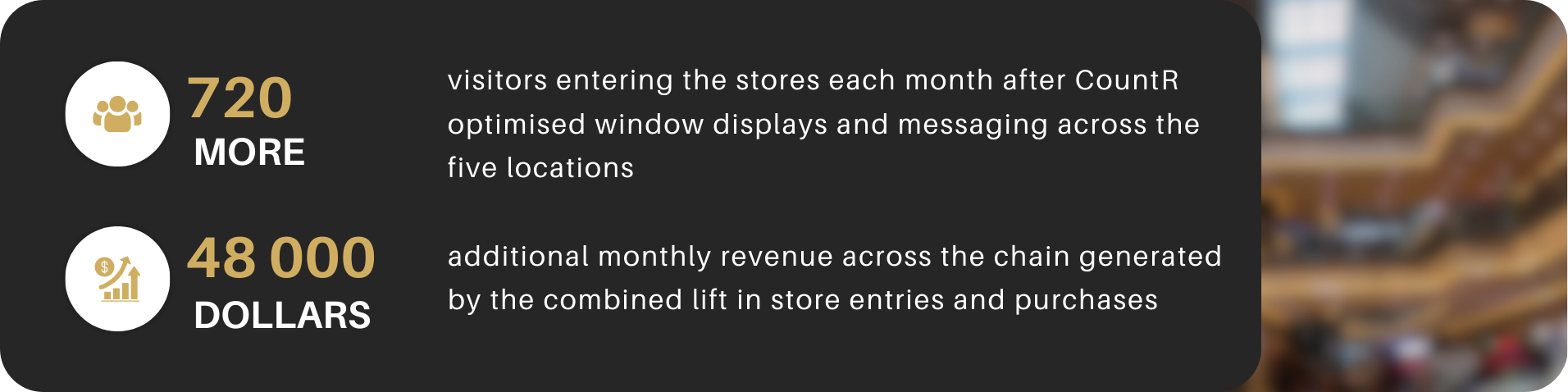
Within three months the chain could design promotions based on evidence instead of intuition. Across the five stores the average number of entering visitors grew from about 6 180 to roughly 6 900 per month, while monthly purchases increased from around 1 120 to about 1 260. Total revenue for the chain rose by approximately 48 000 dollars per month in the same period.


The uplift came mainly from more people deciding to step inside, with a smaller but measurable improvement in the share of visitors who bought something. The retailer also saw that branches with the most frequent returning passers by responded best to tailored window messages. In those locations local campaigns and service focused offers helped turn regular pedestrians into regular shoppers, without relying on large discounts.


By combining storefront traffic counting, in store visitor analytics and returning visitor insights, CountRenabled the jewellery chain to turn its shop windows into a measurable growth driver and to refine promotions that increased both entries and sales in a gradual, sustainable way.