
Overview

Independent retailers often focus heavily on attracting new visitors, yet the largest potential for growth usually lies in returning customers who already know and trust the brand. A regional footwear and apparel chain with five stores wanted to understand how often shoppers came back and which customer groups truly drove in store revenue.


Using CountR visitor counting and demographic analysis, the company gained clear visibility into not only how many people visited but also who they were and how frequently they returned. This new level of insight helped the retailer map loyalty patterns, refine marketing campaigns, and focus resources on the customers with the highest repeat purchase potential.
Their Story

The retailer received around 12 000 in store visits per month across its five locations. Until they installed CountR, management could not reliably see how many of those visits came from new shoppers versus existing customers, or which groups generated the most value. The loyalty program had around 10 percent participation, so it did not provide a full picture of behaviour.


CountR aggregated visit data into unique visitor profiles. Over a typical three month period, the chain saw about 24 000 unique visitors. At the starting point, roughly 37 percent of these customers visited at least twice within that three month window.


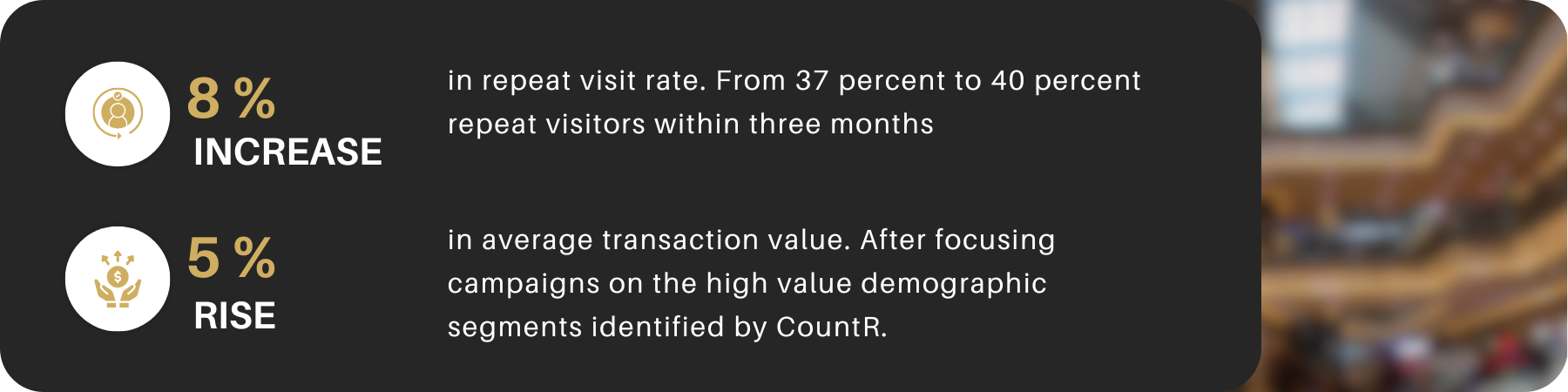
After six months of using CountR insights, targeted communication and simple bounce back offers at the till, the share of customers who returned within three months rose to about 40 percent. With a similar overall visitor base, this meant just over 700 more customers coming back for at least one additional visit per quarter, or roughly 240 extra returning visitors each month.


Demographic analysis highlighted which groups were quietly driving the most value. Women between 30 and 44 years old represented about 22 percent of unique visitors but generated close to 29 percent of total revenue, mainly through slightly higher basket sizes and more frequent visits. Customers between 35 and 49 years old, regardless of gender, made up a little more than one third of visitors yet accounted for almost half of in store revenue.


Previous brand campaigns had leaned strongly toward younger performance focused imagery. Based on the new findings, the marketing team rebalanced creative themes and media plans toward active adults in their thirties and forties, while still keeping younger audiences in the mix. They also introduced targeted messages for high value segments, such as limited time offers valid for a return visit within about sixty days and early access to new product drops for identified regulars.

Results & Conclusion

Within six months, the chain recorded roughly 240 additional returning visitors per month compared with the starting period. The share of total revenue from returning customers increased from about 46 percent to around 50 percent, confirming that a larger part of sales now came from loyal shoppers. Average transaction value rose by roughly 5 percent, helped by a better focus on high value segments, and marketing return on investment improved by around 9 percent as budgets were redirected toward the audiences most likely to come back.


By combining return visitor tracking with demographic insights, the retailer gained a clear view of who their customers were, how often they returned, and which segments created the greatest value. CountR analytics turned raw foot traffic into concrete guidance for loyalty building and campaign planning, helping the brand strengthen its relationship with existing customers and improve long term profitability.