Their Story
The company had previously relied on manager estimates to define busy hours, leading to overstaffing during quiet mornings and staff shortages in late afternoons. Each store averaged around 10 000 visitors per month, but conversion and satisfaction scores dropped sharply during weekends. Managers wanted hard data to guide both daily staff planningand seasonal workforce budgeting.
After implementing CountR’s visitor analytics system, they gained minute-level visibility into daily and weekly visitor peaks.
Data revealed that:
-
Fridays between 4 p.m. and 7 p.m. were the busiest hours across all locations, accounting for 28 percent of weekly traffic.
-
Saturday afternoons (1–5 p.m.) brought in the highest visitor count but also the longest checkout waiting times.
-
Morning hours (10 a.m.–12 p.m.) were consistently overstaffed, with conversion rates 22 percent lower than afternoon periods.
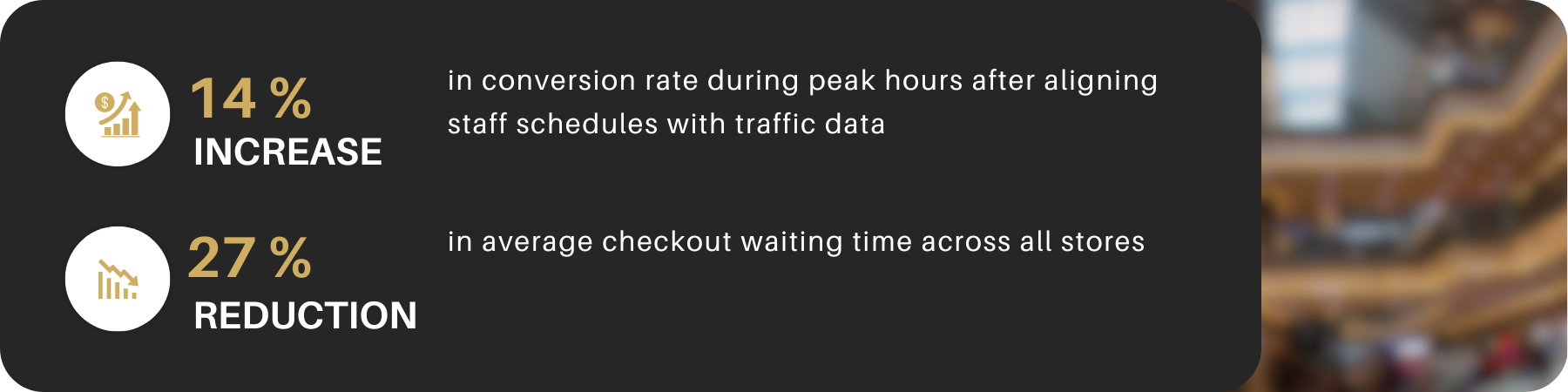
Based on these findings, management introduced a new scheduling model. Staff shifts were redistributed, lunch breaks were staggered, and a dedicated weekend “floating team” was created to cover unexpected surges. Managers also began using CountR’s dashboard for real-time monitoring, allowing on-the-spot reallocation of floor staff and cashiers when the system detected unusually high visitor inflow.
By comparing visitor peaks with transaction data, they found that better coverage during rush hours increased both conversion and average basket value. Over time, the same data was used for seasonal forecasting — enabling HR to plan recruitment campaigns before high-demand months like November and December.